











Asana vs. Notion: Which Is Right for Your Team?
Compare Asana and Notion features, pricing, and project management capabilities. Find which workspace platform best fits your team's goals.
Project tracking tools shape how teams collaborate, organize work, and achieve goals. Asana and Notion represent two distinct approaches: Asana excels at structured project management with powerful OKR capabilities, while Notion offers unlimited customization through its all-in-one workspace. Teams choosing between them often weigh specialized depth against flexible breadth.
Asana vs. Notion at a glance
Both platforms serve growing organizations, but with fundamentally different philosophies.
Overview of Asana
Asana is a collaborative work management platform designed to connect strategic objectives with daily execution across organizations. Recognized as a Gartner Leader for three consecutive years, it serves 150,000+ paying customers, including Fortune 500 companies. The platform excels at transforming high-level goals into actionable workflows while maintaining visibility across departments and projects.
Key Features:
- OKR and strategic alignment with industry-leading 4.63/5 Gartner score.
- Multi-methodology project views (Gantt, Kanban, timeline, calendar).
- Cross-functional workflow automation with no-code rule creation.
- Enterprise security controls, including SAML SSO and audit logs.
- Portfolio management for program-level resource allocation.
- Advanced reporting dashboards with real-time analytics.
- Multi-homing tasks, allowing single work items across multiple projects.
- Native enterprise integration with Salesforce (Enterprise and Enterprise+ tiers).
Ideal for: Mid-market to enterprise organizations requiring strategic goal management, cross-departmental coordination, and sophisticated project portfolio oversight.
Overview of Notion
Notion functions as an all-in-one workspace that consolidates knowledge management, project tracking, and documentation into a single customizable platform. With a 4.6-star rating, it's positioned as knowledge management software that adapts to diverse team workflows through its database-driven architecture.
Key Features:
- Unified database system with relational capabilities and multiple view types.
- Block-based content architecture combining text, databases, and media.
- AI capabilities for automated content generation and search.
- Real-time collaboration with commenting and @mention notifications.
- Template library for standardized workflows and documentation.
- Custom workflow automation through API and integration platforms.
- Enterprise security controls with advanced permissions and audit logs.
- Cross-platform synchronization across web, desktop, and mobile.
Ideal for: SMBs and mid-market teams seeking tool consolidation, extensive customization capabilities, and unified knowledge management across departments.
Side-by-Side Feature Comparison
When to Choose Asana vs. Notion
Choose Asana if you need:
- Strategic goal management with proven OKR capabilities.
- Cross-departmental project coordination at scale.
- Advanced project portfolio management and resource allocation.
- Native enterprise integrations with Salesforce, Tableau, and Power BI.
- Regulatory compliance features and FedRAMP certification roadmap.
- Structured project management workflows without extensive customization.
- Strategy-to-execution alignment across distributed teams.
Choose Notion if you value:
- Tool consolidation to replace multiple knowledge management systems.
- Extreme customization flexibility for unique organizational workflows.
- All-in-one workspace combining docs, databases, and collaboration.
- Strong knowledge management and documentation capabilities.
- Database-driven content organization with relational capabilities.
- Cost savings through reduced software licensing across multiple tools.
- AI-powered content generation and intelligent search features.
Both platforms serve different organizational needs: Asana excels at structured coordination and strategic alignment, while Notion provides unlimited flexibility for teams willing to invest in customization.
How Siit Integrates With Both Tools
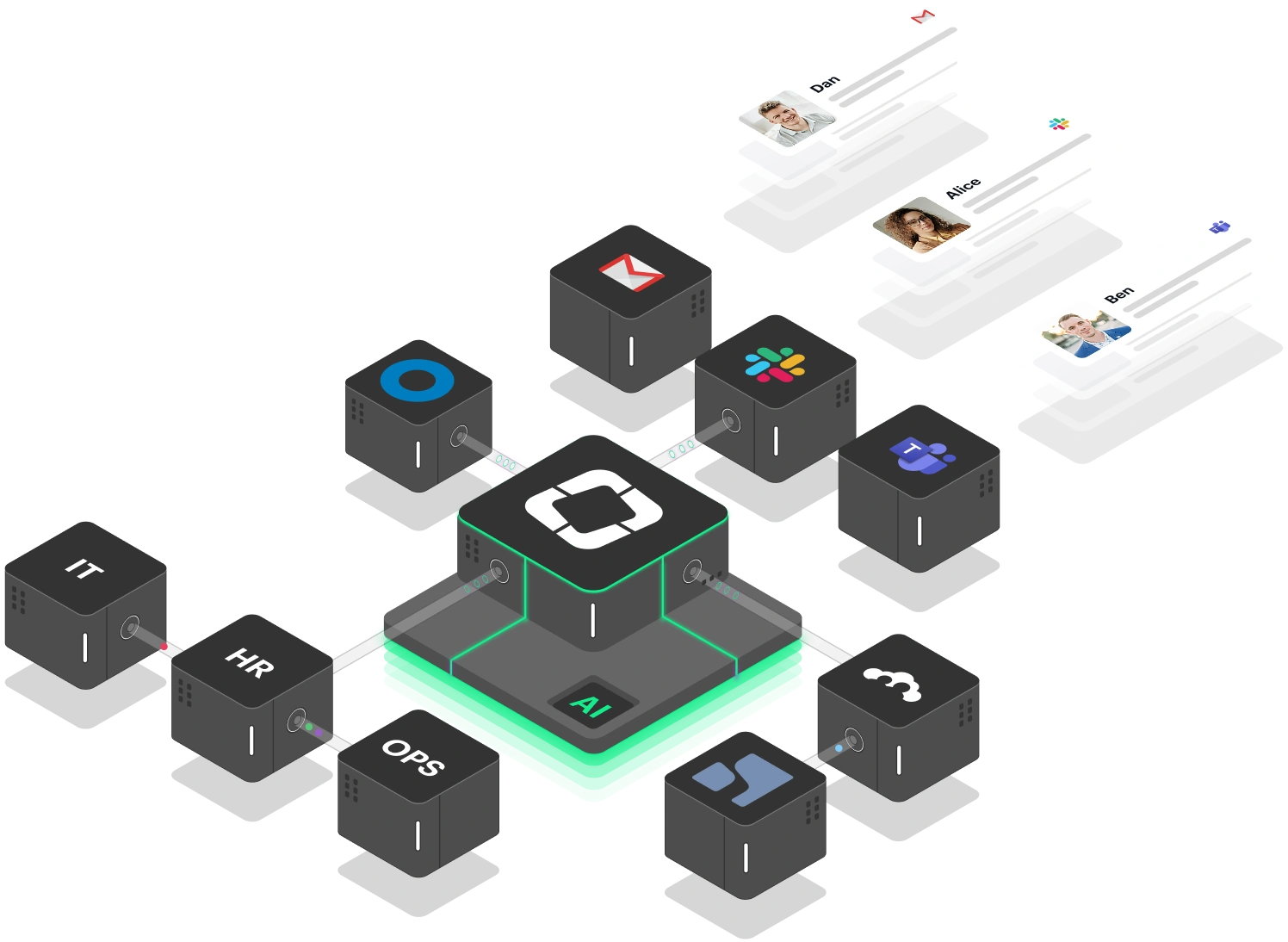
Siit's AI-powered service desk transforms your existing workspace into an intelligent support environment. With Asana, Siit automatically creates and updates tasks when employees submit IT or HR requests in Slack, keeping project managers informed without manual ticket logging. With Notion, Siit pulls from your documentation to answer employee questions instantly—no one has to search through wikis manually.
Teams using both tools get unified request handling. An employee asks about PTO policy in Slack, Siit finds the answer in Notion and logs the interaction in Asana if follow-up is needed. No context switching, no duplicate work.
Start your free trial and see how Siit automates cross-departmental requests while integrating with your existing stack.
FAQs
Can I use both Asana and Notion together effectively?
Yes, many organizations use Asana for structured project management and Notion for knowledge management and documentation. Siit can integrate with both platforms to provide unified internal support across your entire workflow ecosystem.
Which platform is better for teams new to project management software?
Asana typically provides faster time-to-value with structured templates and clear project management conventions. Notion requires more setup time but offers greater long-term customization potential for teams willing to invest in configuration.
Do both platforms work well for remote and distributed teams?
Both excel at remote collaboration. Asana provides strong cross-timezone project visibility and coordination features, while Notion offers real-time collaborative editing and centralized knowledge sharing. Asana users report better mobile experience.
How do the AI capabilities compare between platforms?
Notion offers more comprehensive AI features, including content generation, automated database creation, and intelligent search across workspaces. Asana's AI focuses on work insights and project optimization. Both require paid tiers for full AI access.
Which platform offers better enterprise security and compliance?
Both provide enterprise-grade security with SAML SSO and audit logging. Asana has a disclosed FedRAMP certification roadmap for government compliance, while Notion offers more granular permission controls and data residency options in Enterprise tiers.
Lorem ipsum dolor sit amet, consectetur adipiscing elit. Suspendisse varius enim in eros elementum tristique. Duis cursus, mi quis viverra ornare, eros dolor interdum nulla, ut commodo diam libero vitae erat. Aenean faucibus nibh et justo cursus id rutrum lorem imperdiet. Nunc ut sem vitae risus tristique posuere.