Why companies switch from BMC Helix to Siit
AI that already knows the employee. No CMDB required.
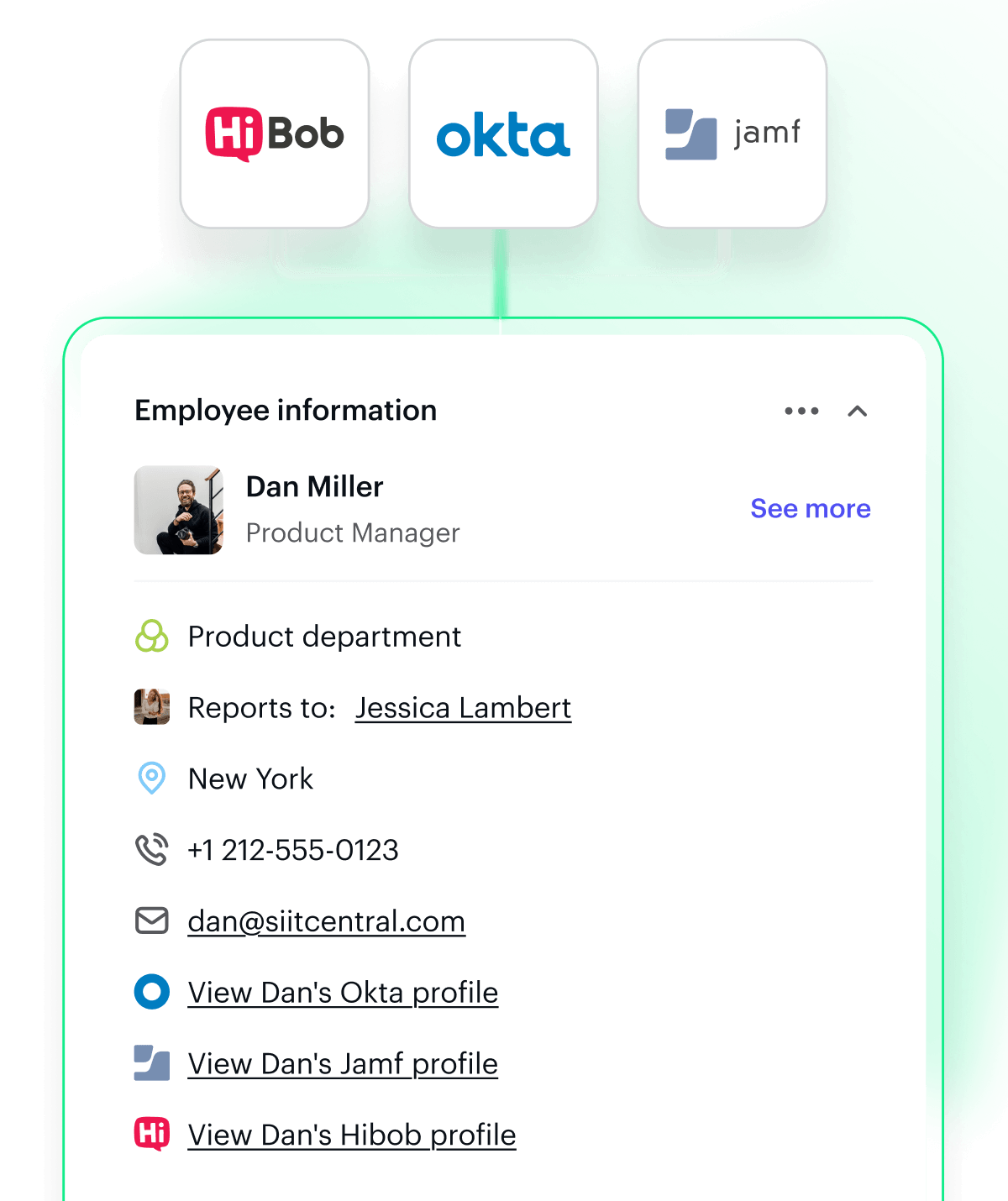
Siit's Unified Data Layer connects directly to your HRIS, IdP, and MDM, building persistent employee profiles that sync live. When a request arrives, the AI already knows who's asking, what they're entitled to, and how to resolve it. No CMDB schema required.
BMC Helix is built around its CMDB: a configuration database that maps relationships between IT assets, infrastructure, and services. Employee identity context (role, manager, SaaS entitlements, HR data) sits outside this model and must be integrated separately through connectors or manual configuration.


AI that closes the ticket. Not just routes it.
Siit's AI closes the loop end-to-end: evaluates policy, routes approvals in Slack or Teams, provisions in Okta or Jamf, and confirms back in thread. The ticket is resolved, not routed for resolution.
BMC Helix ships real AI: HelixGPT provides grounded answers, summaries, and request classification. For actions, it orchestrates rather than executes, provisioning and cross-system changes run through BPMN workflows your administrators pre-build and maintain in Innovation Studio.

Built for where your employees actually work.
Siit is chat-native. Employees submit requests, receive approval cards, and get confirmations without ever leaving Slack or Teams. Dynamic forms, multi-stage approvals, and AI-executed provisioning all happen in-thread. No portal redirect, no context switch, no login required.
BMC Helix is portal-first: the self-service portal is the primary employee interface for submitting and tracking requests. Slack and Teams integrations are available but route substantive interactions back to the portal to complete.

See what happens when your service desk actually delivers.


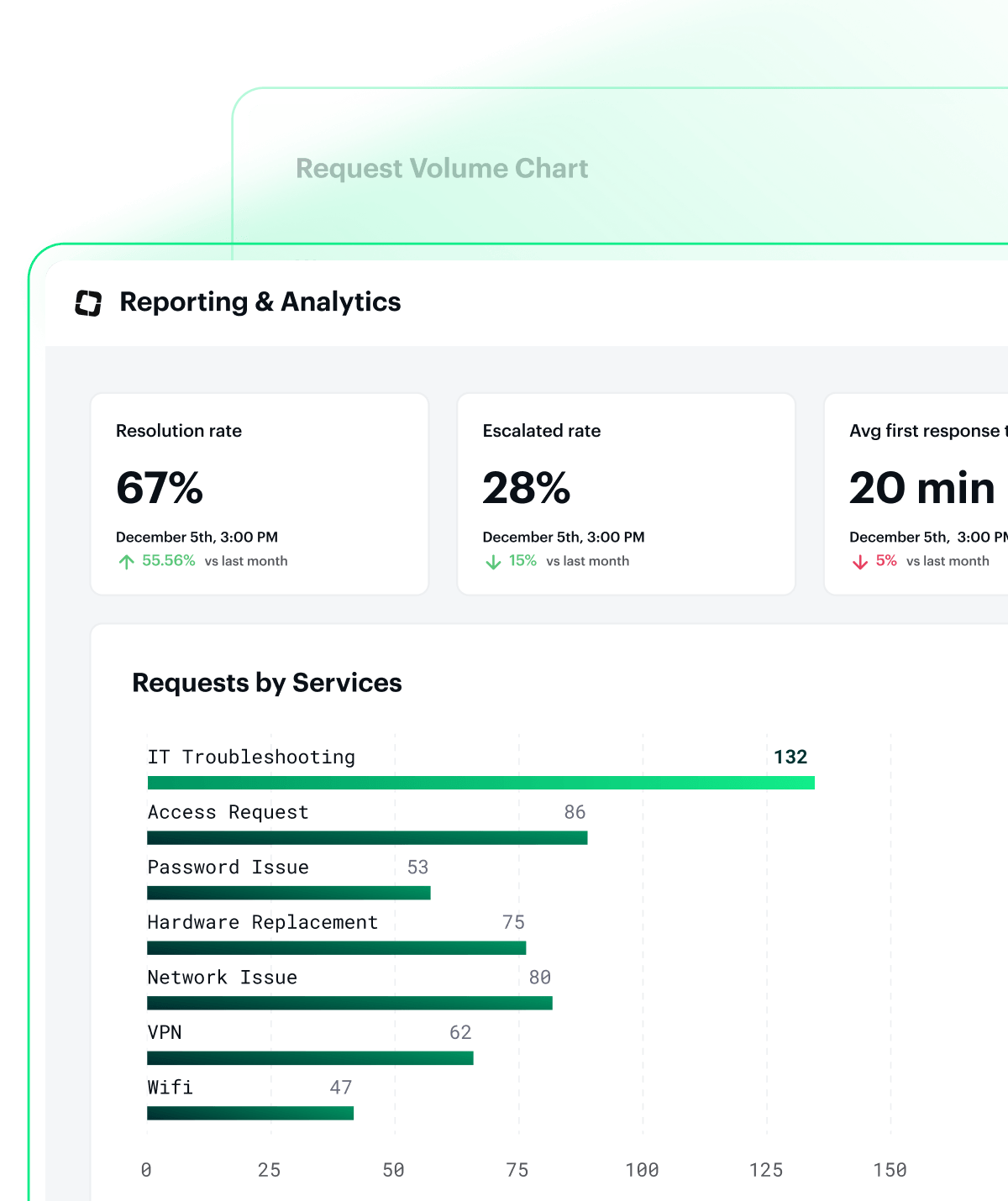
Siit helped deflect 28% of support tickets that otherwise would have been handled by IT.

Siit gives teams autonomy to manage their own requests and business processes without IT help.

Siit has improved our efficiency and cost-effectiveness on our internal help desk and helped us better support our employees.
Trusted by the best






FAQs
What is the difference between Siit and BMC Helix ITSM?

BMC Helix is a CMDB-centric enterprise ITSM platform built for large IT departments managing complex infrastructure and ITIL-governed workflows. Siit is built around your employees: persistent profiles synced live from your HRIS, IdP, and MDM, so the AI resolves requests end-to-end without agent intervention.
Can Siit replace BMC Helix for internal IT operations?
Yes, as the employee-operations layer. Siit replaces the service desk experience: request intake, AI resolution, approvals, and cross-department workflows. Your CMDB and infrastructure governance stay where they are. Migration connects your identity and HR systems, most teams are live within weeks.
Does Siit work inside Slack and Teams?
Yes. Dynamic forms, multi-stage approvals, and AI execution happen entirely within Slack or Microsoft Teams. No portal redirect and no new login required, even for complex multi-party approval workflows.
How does Siit's AI compare to BMC Helix's AI capabilities?
BMC Helix's AI (Helix GPT, predictive analytics) assists trained IT administrators in classifying and routing requests. Siit's AI executes tasks end-to-end: provisioning access in Okta, triggering onboarding in Workday, resetting passwords, using live employee context from your HRIS, IdP, and MDM. The ticket is resolved, not assisted.
How fast can teams go live with Siit after leaving BMC Helix?
Most teams are live within weeks. Migration focuses on connecting your existing identity and HR systems, not rebuilding CMDB schemas, ITIL process flows, or change management configurations.