Why companies switch from Zendesk to Siit
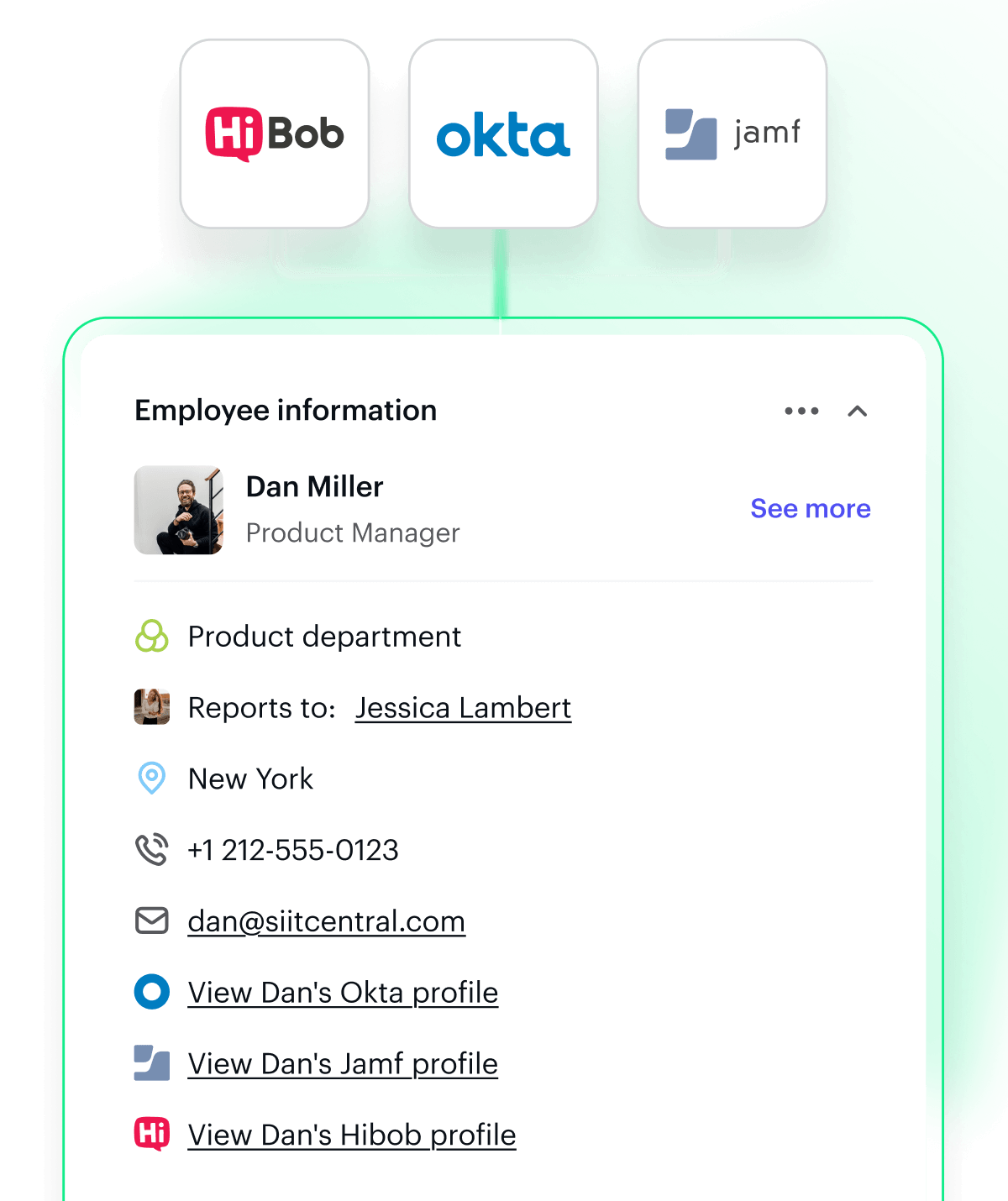
AI that already knows the employee. Before the request arrives.
Siit syncs live context from your HRIS, IdP, and MDM into a single employee profile. When a request arrives, the AI already knows the employee's role, devices, and entitlements with no runtime assembly, no credit consumption.
When an employee submits a ticket in Zendesk, the platform has limited context about who they are. Data like manager, devices, entitlements, and policy must be assembled at runtime via Action Flows that consume monthly credits, and if a call fails, the AI escalates to a human.


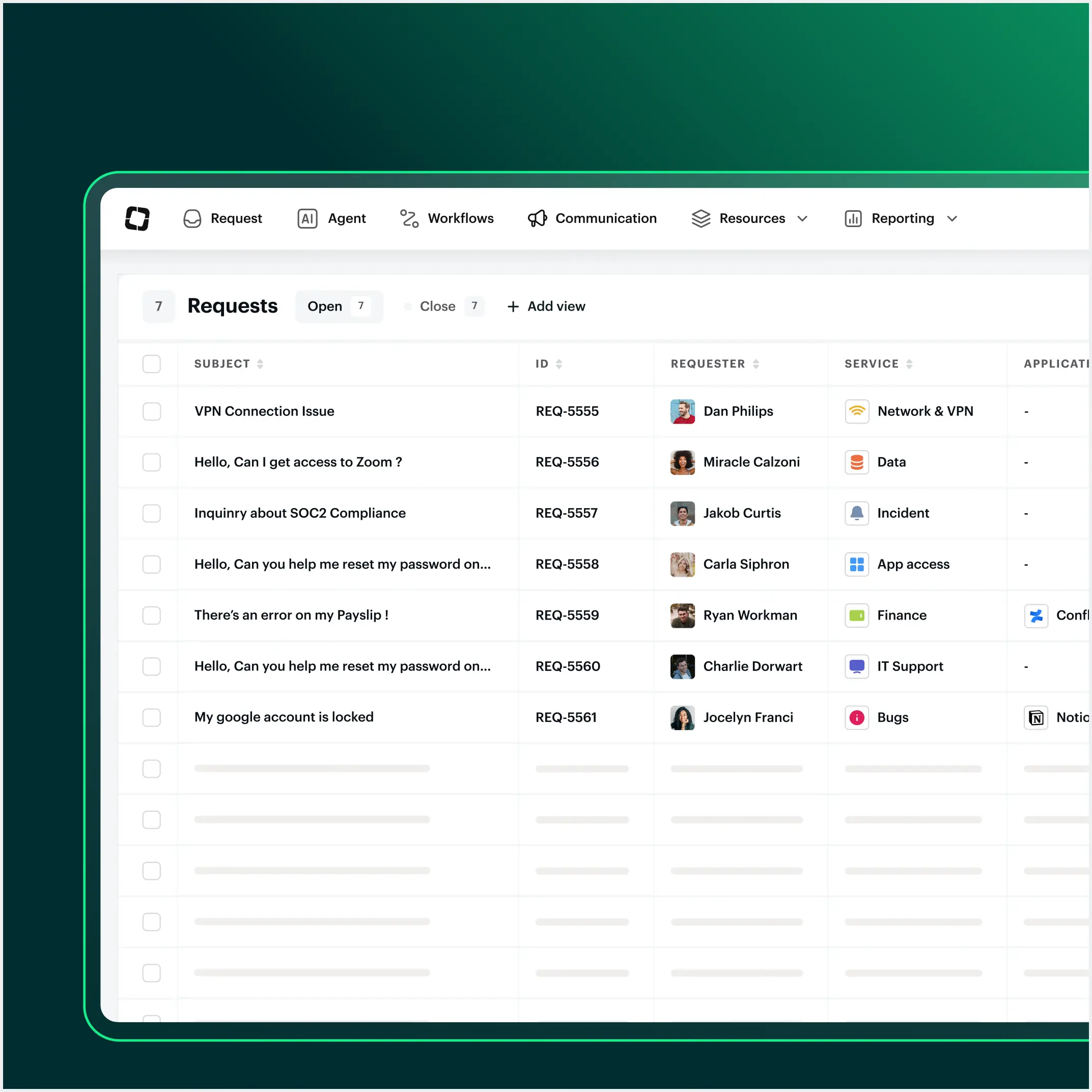
AI that closes the ticket. Not just the agent's tab.
Siit's AI executes the work end-to-end: evaluates policy, routes approvals in Slack or Teams, provisions in Okta or Jamf, and confirms back in thread. The ticket is resolved - not suggested for resolution.
Zendesk Copilot deflects, drafts, and triages. Agent Builder is still in Early Access as of May 2026 and, because Zendesk is ticket-driven, its agents activate on incoming tickets rather than proactively on employee profiles.
Built for where your employees actually work.
Siit is chat-native. Request, approval, provisioning, confirmation - start to finish in Slack or Teams, with zero portal redirect.
Zendesk's Slack integration handles intake and notifications - the moment a workflow requires approvals, conditional forms, or cross-department routing, it redirects to the portal.

See what happens when your service desk actually delivers.


Siit helped deflect 28% of support tickets that otherwise would have been handled by IT.

Siit gives teams autonomy to manage their own requests and business processes without IT help.

Siit has improved our efficiency and cost-effectiveness on our internal help desk and helped us better support our employees.
Trusted by the best






FAQs
What is the difference between Siit and Zendesk?

Zendesk was built to handle anonymous external customers - its data model assembles employee context at runtime via Action Flows that consume monthly automation credits. Siit is built from the opposite premise: persistent employee profiles synced live from your HRIS, IdP, and MDM, so the AI already has full context before the request arrives.
Can Siit replace Zendesk for internal IT operations?
Yes. Siit is purpose-built for the internal use case Zendesk adapted its CX platform to serve. Migration focuses on connecting your identity and HR systems - not rebuilding a customer support schema. Most teams are live within weeks.
Does Siit work inside Slack and Teams?
Yes. Siit is chat-native - dynamic forms, multi-stage approvals, and AI execution happen entirely within Slack or Microsoft Teams. There's no portal redirect and no new login required for employees, even for complex workflows requiring multi-party approval.
How is Siit's AI different from Zendesk Copilot?
Zendesk Copilot ($50/agent/month) summarizes tickets, drafts replies, and triages requests - it makes agents faster. Siit's AI executes tasks end-to-end: provisioning access in Okta, triggering onboarding in Workday, resetting passwords - using live employee context pre-built from your HRIS, IdP, and MDM. The ticket is resolved, not suggested for resolution.
What is Zendesk's Agent Builder, and how does it compare to Siit?
Agent Builder is Zendesk's custom AI agent capability - currently in Early Access as of May 2026, not yet generally available. Each agent requires manual authorization for every tool and knowledge source it can access. Siit's AI agents operate on a pre-built unified data layer and are in production today, with no per-agent authorization overhead.